Skip to content

Best Coffee Grinders for Home Baristas

mm David Park 6 min read

Why Your Grinder Matters More Than Your Machine

Reviewed by David Park Updated

At a Glance

  • Best Overall Eureka Mignon Specialita Balances cup quality with everyday usability better than most home-focused flat-burr grinders; quiet, timed dosing, stepless micro-control.
  • Best Budget Baratza Encore ESP Priced like a starter grinder but built with espresso in mind; replacement parts availability is a long-term strength.
  • Best Single-Dose Niche Zero Built around beans in, grounds out with minimal fuss; stepless, fast to change settings, unusually easy to live with if you rotate coffees.
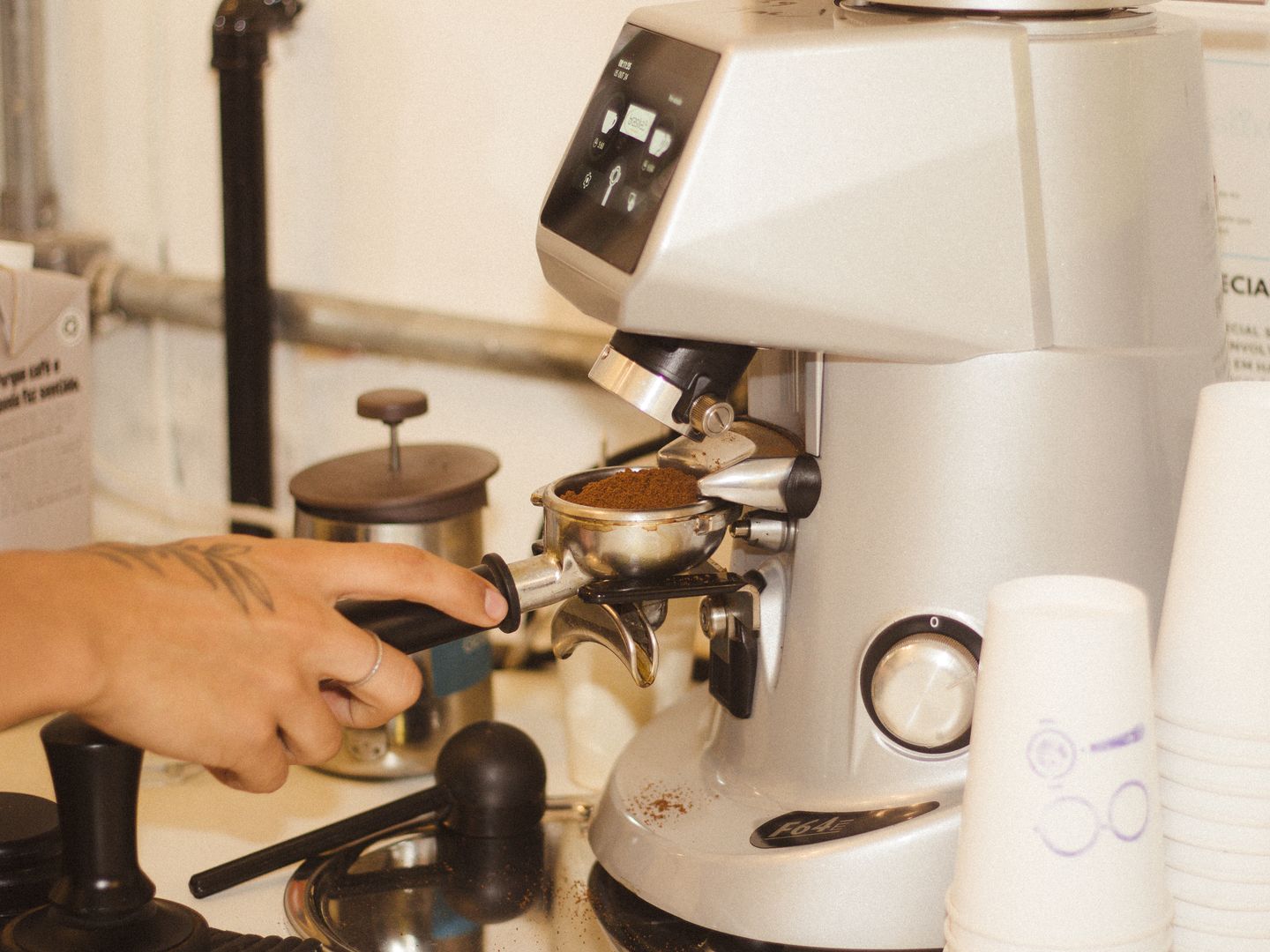
  • Best for Tinkerers DF64 Gen 2 Flat-burr platform with 64 mm compatibility for third-party burr sets; more hands-on routine but the grinder can evolve with your taste.

Key Takeaways

  • Burr grinders—not blades—are the baseline for espresso because uniformity is what makes extraction predictable.

  • Conical burrs lean into heavier, rounder espresso with more forgiveness; flat burrs emphasize clearer separation and precision.

  • The Eureka Mignon Specialita balances cup quality with everyday usability better than most home flat-burr grinders.

  • The Baratza Encore ESP is the rare sub-$200 grinder designed around espresso resolution where it matters.

  • Single-dose grinders like the Niche Zero and DF64 Gen 2 make switching coffees easier but demand more hands-on workflow.

  • Higher-end grinders don't just taste better—they remove friction from dialing in; budget grinders demand more patience.

What Makes a Great Espresso Grinder

Grind quality is the first criterion that actually shows up in the cup. Conical burrs tend to lean into a heavier, rounder espresso with a bit more forgiveness; flat burrs often emphasize clearer separation and can feel more precise once dialed. The Eureka Mignon Specialita uses 55 mm flat burrs, and that size—paired with stepless adjustment—is exactly why it produces espresso that doesn't swing wildly between almost there and what happened. The Baratza Encore ESP and Fellow Opus both use 40 mm conical burrs, which can absolutely make excellent espresso, but they hit their ceiling sooner when you're chasing very narrow recipe windows.

Adjustment and dialing-in is where grinders stop being specs and start being daily life. The Encore ESP is the rare grinder that makes sense for beginners because it's designed around espresso resolution where it matters, yet still stays simple. The Opus is impressively capable across a wide grind range; its big win is keeping the workflow approachable for people who bounce between espresso and other methods. The trade-off is that the Opus's adjustment system can feel less straightforward when you're chasing tiny espresso changes—you may need to be more methodical and take notes.

Workflow—specifically dosing and retention—is the reason single dosing has become the default for a lot of home setups. With the Niche Zero, the headline isn't just its 63 mm conical burrs; it's the way the whole machine is built around beans in, grounds out with minimal fuss. It's stepless, it's fast to change settings, and it's unusually easy to live with if you rotate coffees.

Our Top Picks

These five grinders represent the strongest choices for home baristas across different budgets, workflows, and espresso goals.

Eureka Mignon Specialita

Eureka Mignon Specialita

Best Overall

Balances cup quality with everyday usability better than most home-focused flat-burr grinders; quiet enough to run early without feeling like a kitchen power tool, timed dosing is convenient, stepless adjustment gives true micro control.

4.7/5
  • Quiet operation
  • timed dosing for consistent recipes
  • stepless adjustment for precise dialing
  • 55 mm flat burrs deliver excellent flavor separation
  • Not a single-dose-first design
  • adjustment knob can feel fussy until you learn it
  • mid-$400s to $600 price is a big jump from entry-level
Baratza Encore ESP

Baratza Encore ESP

Best Budget

Priced like a starter grinder but built with espresso in mind; designed around espresso resolution where it matters, yet still stays simple; replacement parts availability is one of Baratza's long-term strengths at $199.95.

4.4/5
  • One of the few legitimate espresso grinders under $200
  • designed for espresso resolution
  • strong parts availability
  • simple operation for beginners
  • Stepped adjustment may land between clicks
  • not the quietest
  • won't give the same flavor separation and tuning finesse as flat-burr grinders
Niche Zero

Niche Zero

Best Single-Dose

Built around beans in, grounds out with minimal fuss; 63 mm conical burrs; stepless, fast to change settings, unusually easy to live with if you rotate coffees; typically sold direct and priced in GBP.

4.6/5
  • True single-dose workflow with minimal retention
  • 63 mm conical burrs
  • stepless adjustment
  • fast to change settings
  • clean, approachable design
  • Sold direct in GBP so U.S. buyers face shipping, tax, and exchange-rate variability
  • typically £559 which can be a premium after conversion
DF64 Gen 2

DF64 Gen 2

Best for Mods

Runs 64 mm flat burrs with strong third-party burr compatibility; the grinder can evolve with your taste; more hands-on routine with bellows purge for low retention; more time cleaning, aligning, and tweaking.

4.3/5
  • 64 mm flat burrs with many third-party burr sets available
  • platform mindset for upgrading burrs
  • good flavor separation once dialed
  • More hands-on routine
  • bellows purge commonly needed
  • may spend more time cleaning, aligning, or tweaking than appliance-like grinders
Fellow Opus

Fellow Opus

Best Multi-Method

Compact 40 mm conical burr grinder that credibly covers espresso and everything else without the price cliff; low-retention and anti-static design; modern and tidy experience for $199.95.

4.5/5
  • Covers espresso and other brew methods
  • compact and modern design
  • low-retention and anti-static behavior
  • priced at $199.95
  • Espresso obsessives may outgrow it
  • adjustment system can feel less straightforward for tiny espresso changes
  • 40 mm conical burrs hit ceiling sooner with very narrow recipes

Understanding Burr Types and Adjustment Systems

Grind quality is the first criterion that actually shows up in the cup. Conical burrs tend to lean into a heavier, rounder espresso with a bit more forgiveness; flat burrs often emphasize clearer separation and can feel more precise once dialed. The Eureka Mignon Specialita uses 55 mm flat burrs, and that size—paired with stepless adjustment—is exactly why it produces espresso that doesn't swing wildly between almost there and what happened.

The Baratza Encore ESP and Fellow Opus both use 40 mm conical burrs, which can absolutely make excellent espresso, but they hit their ceiling sooner when you're chasing very narrow recipe windows. The Encore ESP is the rare grinder that makes sense for beginners because it's designed around espresso resolution where it matters, yet still stays simple. At $199.95, it's also one of the few legitimate espresso grinders under 200 that I'd recommend without a long list of caveats.

The Opus is impressively capable across a wide grind range; its big win is keeping the workflow approachable for people who bounce between espresso and other methods. The trade-off is that the Opus's adjustment system can feel less straightforward when you're chasing tiny espresso changes—you may need to be more methodical and take notes.

Workflow—specifically dosing and retention—is the reason single dosing has become the default for a lot of home setups. With the Niche Zero, the headline isn't just its 63 mm conical burrs; it's the way the whole machine is built around beans in, grounds out with minimal fuss. It's stepless, it's fast to change settings, and it's unusually easy to live with if you rotate coffees.

If you like the idea of single dosing but want flat-burr options and a more platform mindset, the DF64 Gen 2 is the pragmatic choice. It runs 64 mm flat burrs, and the real appeal is compatibility: many third-party burr sets exist in this size, so the grinder can evolve with your taste. The DF64's honest drawbacks are also part of the deal. It's more of a hands-on routine: a bellows purge is commonly used to keep retention low, and you may spend more time cleaning, aligning, or tweaking than you would with a more appliance-like grinder.


Home Espresso Grinders: Pros and Cons

Pros

  • Burr grinders deliver uniform particle size for predictable extraction
  • Stepless adjustment on flat-burr models gives true micro control
  • Single-dose workflow makes switching coffees easy and minimizes retention
  • Quality grinders can last years with proper maintenance and parts availability

Cons

  • Entry-level grinders demand more patience to dial in narrow espresso recipes
  • Stepped adjustment may land between ideal settings on budget models
  • Higher-end grinders require significant upfront investment over integrated machines

What to Consider Before You Buy

What to Consider Before You Buy

Finally, a quick reality check on value: the grinder that matches your routine beats the grinder with the best forum reputation. If you make two drinks a day and keep one coffee on the counter, the Specialita's timed workflow is a gift. If you switch coffees constantly, the Niche Zero's single-dose simplicity makes more sense. If you're the kind of person who will actually swap burrs and chase profiles, the DF64 Gen 2 is the right kind of rabbit hole. And if you're buying your first setup and trying to avoid expensive mistakes, the Encore ESP or Opus is the smart place to start.

Grinder Comparison Overview

Model Burr Type Price
Eureka Mignon Specialita 55 mm flat $400–$600 Stepless
Baratza Encore ESP 40 mm conical $199.95 Stepped
Niche Zero 63 mm conical £559 Stepless
DF64 Gen 2 64 mm flat Varies Stepless
Fellow Opus 40 mm conical $199.95 Multi-method

Prices and availability can change quickly, so confirm current listings before you commit.

Final Verdict

Buy the grinder that makes consistency easy, not the one that makes you feel like you should be consistent. For most households, that means starting with the Encore ESP or Opus, then moving up only when you can clearly describe what you're missing. The biggest trade-off is simple: higher-end grinders don't just taste better—they remove friction from dialing in—while budget grinders can absolutely deliver great espresso, but they demand more patience to get there.

Shop Now
Disclosure This site may earn a commission from links to recommended products at no extra cost to you. We only recommend grinders we've tested and believe will serve home baristas well.

Ready to Upgrade

Shop Coffee Grinders and Accessories

Browse our curated selection of espresso grinders, burr sets, and maintenance tools to build your home barista station.

mm

David Park

Coffee Gear Editor

With a background in product testing and a deep love for specialty coffee, David evaluates grinders, machines, and accessories with meticulous attention to detail. His reviews focus on long-term reliability, maintenance requirements, and real-world value for home users investing in quality equipment.